Kia Battery Replacement: Inspection, Testing & EV Battery Basics
Batteries fail in predictable ways—slow cranks, low reserve capacity, unstable voltage under load, or intermittent electrical faults that look like “random” warning lights. This page breaks down how battery inspection works, what replacement really means for modern Kia vehicles (including EV and PHEV), and what Denver and Aurora drivers should expect in real-world conditions like cold starts, short trips, and higher accessory use.
Most battery issues are confirmed by measuring state of charge, internal resistance, and voltage drop under a controlled load—not by guessing. In Denver and Aurora, cold mornings and short commutes can reduce usable capacity and accelerate 12V failures, especially on vehicles with heavy electronics. For EV and PHEV models, service often includes both the 12V battery system and high-voltage battery health checks, because they perform different jobs.
What “battery service” actually includes
A proper battery appointment is a short diagnostic process, not just swapping parts. We start by confirming symptoms and checking charging health, because alternator output (on gas vehicles) or the DC-DC charging system (on EV/PHEV) can mimic a failing battery. Battery inspection also includes terminal condition, cable integrity, and parasitic draw checks when needed—important if a vehicle sits for days or has aftermarket accessories.
Core tests you should expect
- Open-circuit voltage: a baseline reading after the battery rests, used to estimate state of charge.
- Load or conductance test: evaluates voltage sag and internal resistance to predict real starting/operating performance.
- Charging system check: confirms the system that replenishes the battery is operating correctly under normal loads.
- Connection and corrosion review: high resistance at terminals can cause slow starts and intermittent electronics issues.
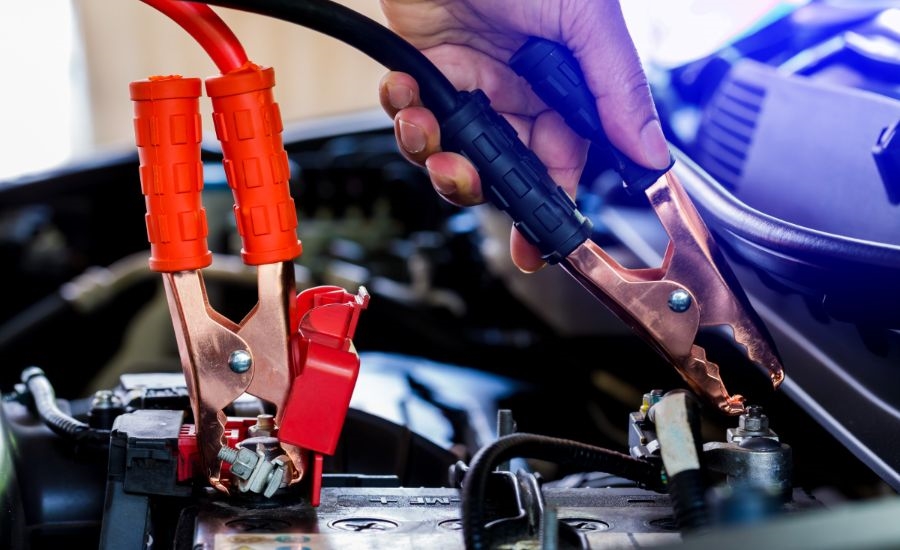
12V vs high-voltage: what EV and PHEV owners need to know
EV and PHEV models have two battery systems with different responsibilities. The high-voltage (HV) pack stores the energy used for propulsion and high-power systems. The 12V battery runs “traditional” vehicle electronics—computers, locks, lights, infotainment, and the modules that allow the vehicle to wake up and close contactors for HV operation. If the 12V system is weak, an EV can appear “dead” even when the HV pack has charge.
In practical terms: a strong HV battery does not guarantee a healthy 12V battery. Many modern EV/PHEV vehicles cycle the 12V battery more often than older cars due to constant module activity, telematics, and security systems. That’s why kia battery voltage readings and charging behavior matter during inspection, especially in Denver winter conditions and for drivers with short trips.
What the 12V battery does on EV/PHEV
- Powers control modules, relays/contactors, and “wake-up” systems that enable driving.
- Stabilizes electrical loads during start-up and transitions between sleep/awake states.
- Supports accessories and safety systems, even when the vehicle is not “ready.”
What battery health means for high-voltage packs
High-voltage battery “health” is usually described as capacity retention and balance between cell groups. Temperature, charging habits, and time influence this, but most owners want practical guidance: does the pack deliver expected range and power, and does it charge normally? For most service visits, hv checks focus on diagnostic codes, thermal system status, charging performance, and whether measured behavior matches normal operation for the vehicle.
Common signs you may need a battery test
Many battery failures start as “sometimes” problems. If you’re in Denver or Aurora and you notice issues that appear mainly in the morning, after the vehicle sits, or during cold snaps, a quick test can prevent a no-start situation.
- Slow crank, multiple start attempts, or dimming lights when starting.
- Intermittent warning lights, clock resets, or infotainment reboots.
- Battery light illuminated or repeated “low voltage” messages.
- Aftermarket accessories (dash cams, audio amps) or frequent short trips.
- EV/PHEV: vehicle won’t enter “Ready” mode or won’t wake up reliably.
- Replacing the battery without checking the charging system first—especially after a jump-start.
- Assuming “it starts fine now” means the battery is healthy; failing batteries often recover briefly after charging.
- Ignoring corroded terminals, loose clamps, or damaged cables that create hidden resistance.
- On EV/PHEV, focusing only on the high-voltage pack and overlooking the 12V system.
- Choosing the wrong spec battery (size, cold cranking performance, or AGM requirement) for the vehicle’s electronics load.
Popular Kia models and typical battery needs
Battery requirements vary by engine, trim, and electrical demand. The table below summarizes common patterns we see for Kia battery service, including vehicles frequently driven across Denver and Aurora. Exact specifications can differ by model year, so inspection includes verifying the correct fit and rating.
| Model (common in Denver/Aurora) | Battery system(s) | Typical practical needs | What we test |
|---|---|---|---|
| Sportage (gas / hybrid / PHEV) | 12V (all) + HV (PHEV) | Accessory-heavy trims can stress 12V; PHEV adds HV diagnostic checks | 12V load test, charging behavior, module wake/sleep, HV codes if applicable |
| Sorento (gas / hybrid / PHEV) | 12V (all) + HV (PHEV) | Family use + short trips in Denver can reduce reserve capacity over time | Voltage drop under load, terminal resistance, charging verification |
| Telluride | 12V only | High electrical load (infotainment, heated features) benefits from strong CCA | Cranking performance, alternator output, cable/ground integrity |
| K5 / Forte / K4 | 12V only | Urban stop-and-go + frequent short trips can undercharge the battery | State of charge, conductance, parasitic draw if repeated drains occur |
| Carnival | 12V only | Frequent door/accessory use can increase drain; reserve capacity matters | Reserve capacity indicators, charging verification, terminal resistance |
| Niro (HEV / PHEV / EV) | 12V + HV (PHEV/EV) | 12V performance is critical for wake-up; HV checks focus on charging behavior | 12V load test, DC-DC function, HV diagnostics and thermal status |
| EV6 / EV9 | 12V + HV | 12V cycling can be more frequent; HV checks relate to range, charging, and temperature control | 12V stability, DC-DC charging, scan for HV-related codes and charging data |
How Kia Battery Replacement works: step-by-step
A battery swap on a modern vehicle is only “simple” when everything else is healthy. The goal is to install the correct battery type, confirm stable electrical behavior, and prevent repeat drains. For Denver and Aurora drivers, we also prioritize clean connections and strong cold-start performance.
Process overview
- Confirm the concern (no-start, slow crank, repeated drains, EV wake-up issues).
- Measure baseline voltage and run a load/conductance test to assess usable capacity.
- Inspect terminals, clamps, grounds, and cable routing for hidden resistance or corrosion.
- Verify charging system health (alternator on gas models; DC-DC system behavior on EV/PHEV).
- Replace with the correct spec battery and protect connections; reset clocks/settings if needed.
- Final verification test to confirm stable voltage under real accessory load.
Battery inspection details: voltage, load, and drain
A useful inspection answers three questions: can the battery hold charge, can it deliver current under load, and is something draining it faster than normal? That’s why a single reading isn’t enough. We look for patterns—stable vs sagging voltage, recovery behavior after load, and whether charging replenishes the battery correctly after driving.
If you’ve searched “kia batteries” or “kia battery health,” you’ve probably seen general advice like “check the voltage.” Voltage matters, but the more practical indicator is how the battery behaves under load. A battery can show a normal resting value but still collapse during starting or accessory demand due to increased internal resistance.
When parasitic draw testing makes sense
If a battery repeatedly dies overnight or after a weekend, we may look for abnormal key-off draw. Common culprits include stuck modules, aftermarket electronics, and accessories that don’t sleep properly. In Denver and Aurora, vehicles that sit outside in cold weather are more likely to show the problem because reduced temperature decreases effective capacity.
Cost, timing, and what to expect
Battery service is usually fast, but timing depends on diagnosis. A straightforward replacement can be completed in a single visit, while repeated drains or EV/PHEV electrical concerns may require additional testing time. We prioritize clear communication—what failed, why it failed, and how to reduce the chance of repeat issues.
| Service | Typical time | Typical outcomes | Best for |
|---|---|---|---|
| Battery inspection & load test | ~20–45 minutes | Pass/fail with measured data; charging system sanity check | Slow starts, warning lights, “maybe” symptoms |
| Standard battery replacement | ~30–75 minutes | Correct fit, clean connections, stable voltage under accessory load | Failed load test or confirmed aging battery |
| Repeated drain / electrical diagnosis | Variable (often 1–3 hours) | Identify draw source, confirm sleep behavior, recommend fix steps | Battery dies overnight, frequent jump-starts, accessory-related issues |
Practical tips for longer battery life in Denver and Aurora
Battery life is heavily influenced by usage patterns. In Denver, short drives can leave a battery partially charged—especially in winter—because the vehicle spends more time starting than cruising. In Aurora, long accessory sessions (heated seats, defrost, chargers) can increase the load at low engine speeds.
Habits that help
- If you mostly drive short trips, include one longer drive weekly to restore charge.
- Avoid leaving accessories on with the engine off (or vehicle not “Ready” for EVs).
- Keep terminals clean and tight; high resistance wastes charging energy.
- If the vehicle sits, consider periodic operation to prevent deep discharge.
- Get tested before winter; cold reduces available current even on healthy batteries.
If you’re specifically searching for kia battery denver support, the fastest path is a measured inspection. It’s the most accurate way to decide whether you need charging system repair, a replacement, or a draw diagnosis.
Why choose Kia service for battery work
Battery issues are often electrical issues in disguise. Kia vehicles rely on multiple modules and networked systems that can be sensitive to low voltage, so correct testing matters. Our approach is built around transparency: measured results, an explanation you can understand, and a clear path forward—whether that’s a simple replacement or a deeper diagnosis. For drivers across Denver and Aurora, we focus on the conditions that actually cause battery failures: cold starts, short drive cycles, and heavy electronics use.
We also pay attention to the details that prevent comebacks: correct battery type, secure terminal torque, protection against corrosion, and post-install verification under real loads. If you care about kia battery health for long-term ownership, these small steps make a measurable difference.
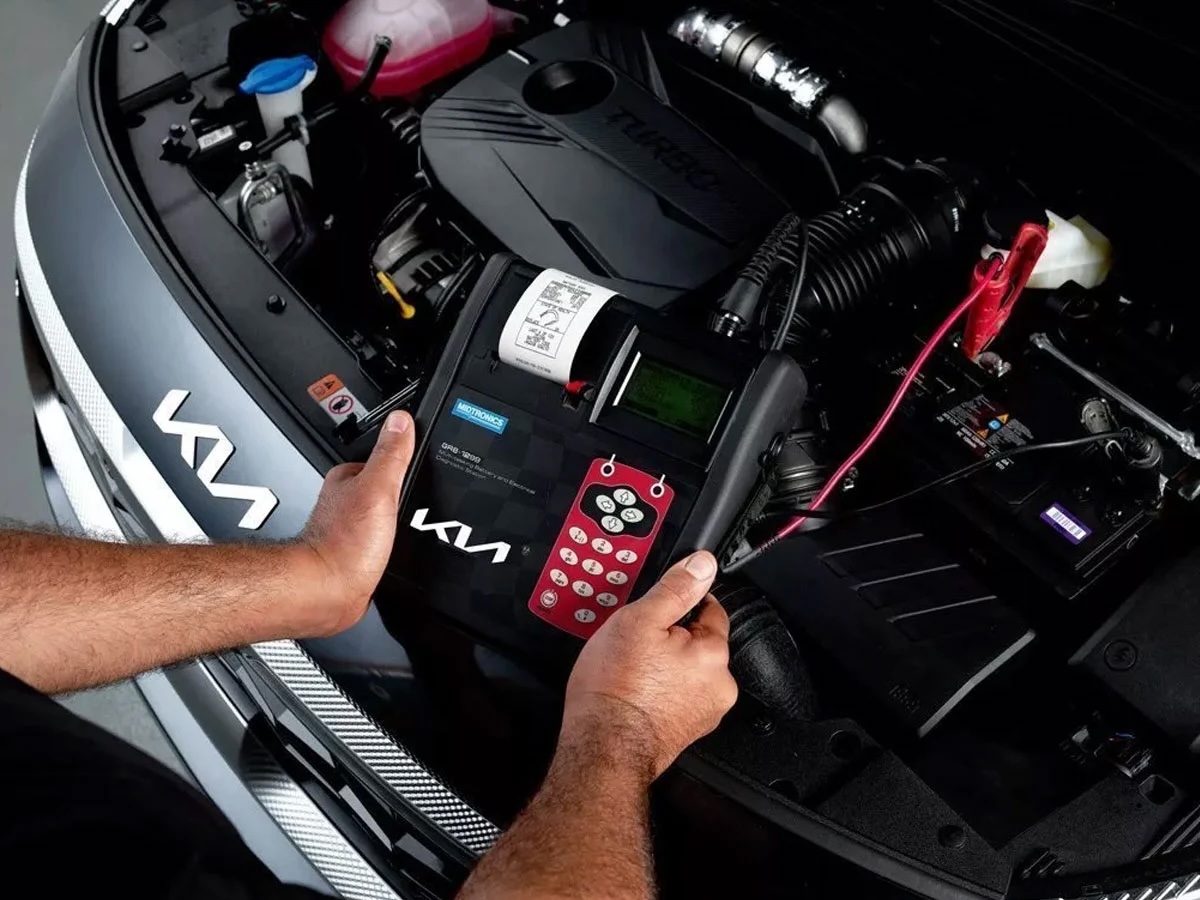
FAQ: Battery replacement and EV battery questions
How do I know if I need Kia Battery Replacement or just a recharge?
A recharge helps if the battery is healthy but discharged. A replacement is likely when testing shows poor capacity or high internal resistance, especially if voltage drops sharply during a load test. In Denver and Aurora, repeated short trips can keep a battery undercharged, so the best next step is a measured inspection rather than guessing.
Do Kia EV and PHEV models really have a 12V battery?
Yes. EVs and PHEVs use a 12V battery to power computers, locks, lighting, and the systems that allow the vehicle to wake up and connect the high-voltage battery. If the 12V battery is weak, the vehicle can fail to enter “Ready” mode even when the high-voltage pack has charge.
What is normal kia battery voltage for a healthy 12V system?
Normal readings depend on whether the battery is resting, being charged, or under load. A resting measurement can look “fine” while the battery still fails under load due to internal resistance. That’s why inspection includes a load or conductance test, plus a charging-system check, not only a single voltage number.
How long does a typical 12V battery last in Denver?
Lifespan varies with driving habits and temperature exposure. Cold starts and short trips common in Denver can reduce effective capacity and stress the battery over time. If you’ve had multiple jump-starts, notice intermittent electronics resets, or drive mostly short routes, testing is the most reliable way to estimate remaining life.
Can a bad battery cause warning lights and sensor issues?
Yes. Low voltage can cause modules to reset, communicate inconsistently, or trigger faults that look like unrelated problems. A weak battery can also produce fluctuating voltage under accessory loads, which affects sensitive electronics. Verifying battery and charging health early can prevent unnecessary parts replacement.
What should I do if my battery keeps dying overnight in Aurora?
Repeated overnight failures often point to a parasitic draw, a battery that can’t hold charge, or a charging system problem. If it happens after adding accessories, that’s a strong clue. Diagnosis may include measuring key-off draw and confirming modules go to sleep properly, then validating the fix with repeat testing.
Does Kia Battery Replacement include checking the alternator or DC-DC charger?
It should. A new battery won’t fix a weak alternator on a gas vehicle, and EV/PHEV models rely on a DC-DC system to maintain the 12V battery. A professional replacement visit typically includes verifying the charging system under normal electrical loads, so the new battery isn’t immediately stressed or undercharged.
Is it safe to jump-start an EV or PHEV with a weak 12V battery?
Jump-starting a 12V system can be safe when done correctly, but the risk is using incorrect procedures or creating voltage spikes. Because EV/PHEV systems manage high-voltage contactors and sensitive electronics, it’s smart to have the 12V system tested afterward. If the 12V battery repeatedly needs a jump, replacement is often the most reliable solution.
Key Takeaways
- Battery inspection should include load testing, not just a voltage reading.
- EV and PHEV vehicles use both a 12V battery and a high-voltage battery pack.
- Short trips and cold mornings in Denver can reduce usable capacity faster than you expect.
- Repeated dead batteries often mean parasitic draw or charging issues, not just “bad luck.”
- Correct battery type and clean, low-resistance connections prevent repeat problems.
- If you care about kia battery health, measure performance under real accessory load.
- Aurora and Denver drivers benefit most from testing before winter, not after a no-start.
If you’re weighing whether you need Kia Battery Replacement now or just a test, the best approach is simple: measure it. Battery service should end with clear data, a clear recommendation, and a clear plan that fits your driving patterns in Denver and Aurora.