Kia EV6 Service Intervals: Complete Maintenance Guide
Published June 13, 2026 • Emich Kia • Denver, CO
Quick Answer
The Kia EV6 requires significantly less maintenance than any gas-powered vehicle. With no engine oil, spark plugs, transmission fluid, or timing belts to worry about, your primary service intervals are tire rotations every 7,500 miles, brake inspections every 7,500 miles, cabin air filter replacement every 15,000–30,000 miles, and brake fluid replacement every 48,000 miles or 4 years. The high-voltage battery coolant does not need replacement until 120,000 miles or 10 years. At Emich Kia in Denver, our factory-trained EV technicians handle every aspect of EV6 maintenance with the specialized tools and diagnostic equipment your vehicle demands.
Key Takeaways
- The EV6 eliminates oil changes, spark plugs, transmission fluid flushes, exhaust repairs, and timing belt replacements entirely.
- Core maintenance centers on tire rotations (every 7,500 mi), brake inspections, cabin air filter swaps, and brake fluid replacement.
- High-voltage battery coolant lasts 120,000 miles or 10 years before requiring its first replacement.
- The GT model with 576 hp demands more frequent tire replacement and brake monitoring due to extreme torque output.
- Denver altitude and cold winters make battery preconditioning and winter tire considerations especially important.
- Kia provides a 10-year/100,000-mile battery warranty and 10-year/100,000-mile powertrain warranty.
EV6 Variants and Specifications
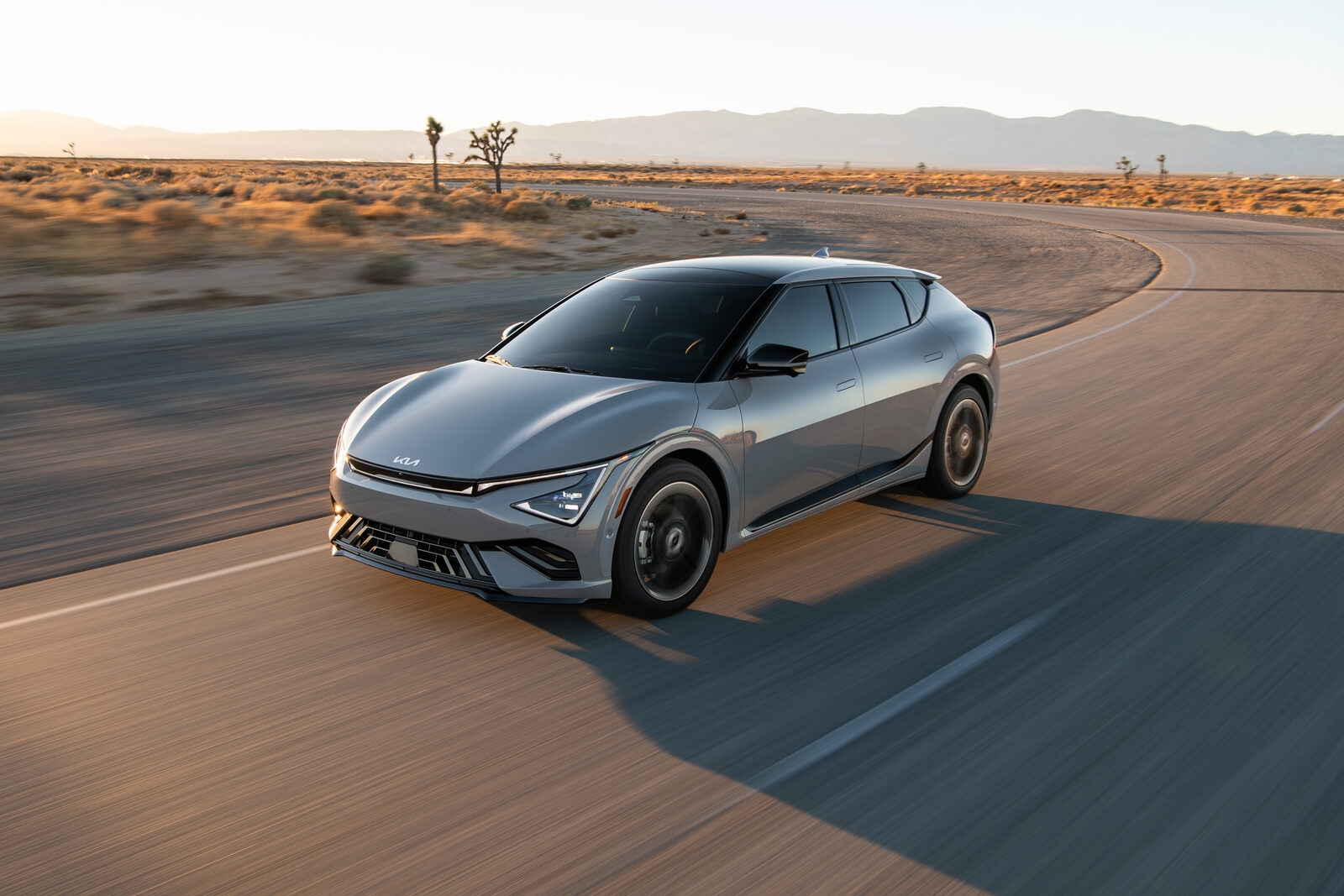
In production since 2022 and refreshed for 2025 with updated styling and technology, the Kia EV6 is built on the dedicated Electric Global Modular Platform (E-GMP)—the same architecture underpinning the larger EV9 SUV, but in a lighter, more agile crossover package. Understanding your specific EV6 configuration helps determine which service intervals apply most directly to your vehicle.
Standard Range RWD: Equipped with a 58 kWh battery pack and a single rear-mounted motor, the Standard Range model delivers approximately 232 miles of range. Curb weight sits around 4,200 pounds, making it the lightest EV6 variant and the easiest on tires and brakes.
Long Range RWD: Stepping up to the 77.4 kWh battery pack extends range to approximately 310 miles while maintaining a single rear motor. This is the efficiency champion of the lineup, and its moderate weight and rear-wheel-drive layout contribute to predictable, even tire wear patterns.
Long Range AWD: Adding a second motor at the front axle provides all-wheel drive with approximately 282 miles of range. The dual-motor configuration adds weight (roughly 4,500 pounds) and distributes torque across all four tires, which can affect wear patterns differently than the RWD models.
GT: The performance flagship pairs the 77.4 kWh battery with dual motors producing a combined 576 horsepower, launching from 0 to 60 mph in just 3.4 seconds. Weighing approximately 4,600 pounds and wearing high-performance tires, the GT has the most demanding service profile of any EV6 variant. Its massive torque output accelerates tire wear, and aggressive driving increases brake component stress.
All EV6 models share the advanced 800-volt electrical architecture that enables DC fast charging at rates up to 350 kW. Under optimal conditions, this system can replenish the battery from 10% to 80% in approximately 18 minutes, making the EV6 one of the fastest-charging EVs available.
What the EV6 Eliminates: No More ICE Maintenance
If you are transitioning from a gasoline or hybrid vehicle, the single most striking difference with the EV6 is the sheer volume of maintenance items that simply vanish. The following services are completely eliminated:
- Engine oil and filter changes — No internal combustion engine means no oil to degrade or filters to clog.
- Spark plug replacement — Electric motors have no ignition system.
- Transmission fluid flushes — The EV6 uses a single-speed reduction gear, not a multi-speed transmission.
- Timing belt or chain service — There is no timing system in an electric drivetrain.
- Exhaust system repairs — No exhaust manifold, catalytic converter, or muffler exists on the vehicle.
- Fuel filter replacement — No fuel system to filter.
- Emission system servicing — Zero tailpipe emissions means zero emission-related maintenance.
This elimination of traditional maintenance items can reduce your overall service costs by 30% to 50% compared to owning a similarly priced gasoline crossover over the life of the vehicle.
Complete EV6 Service Schedule by Mileage
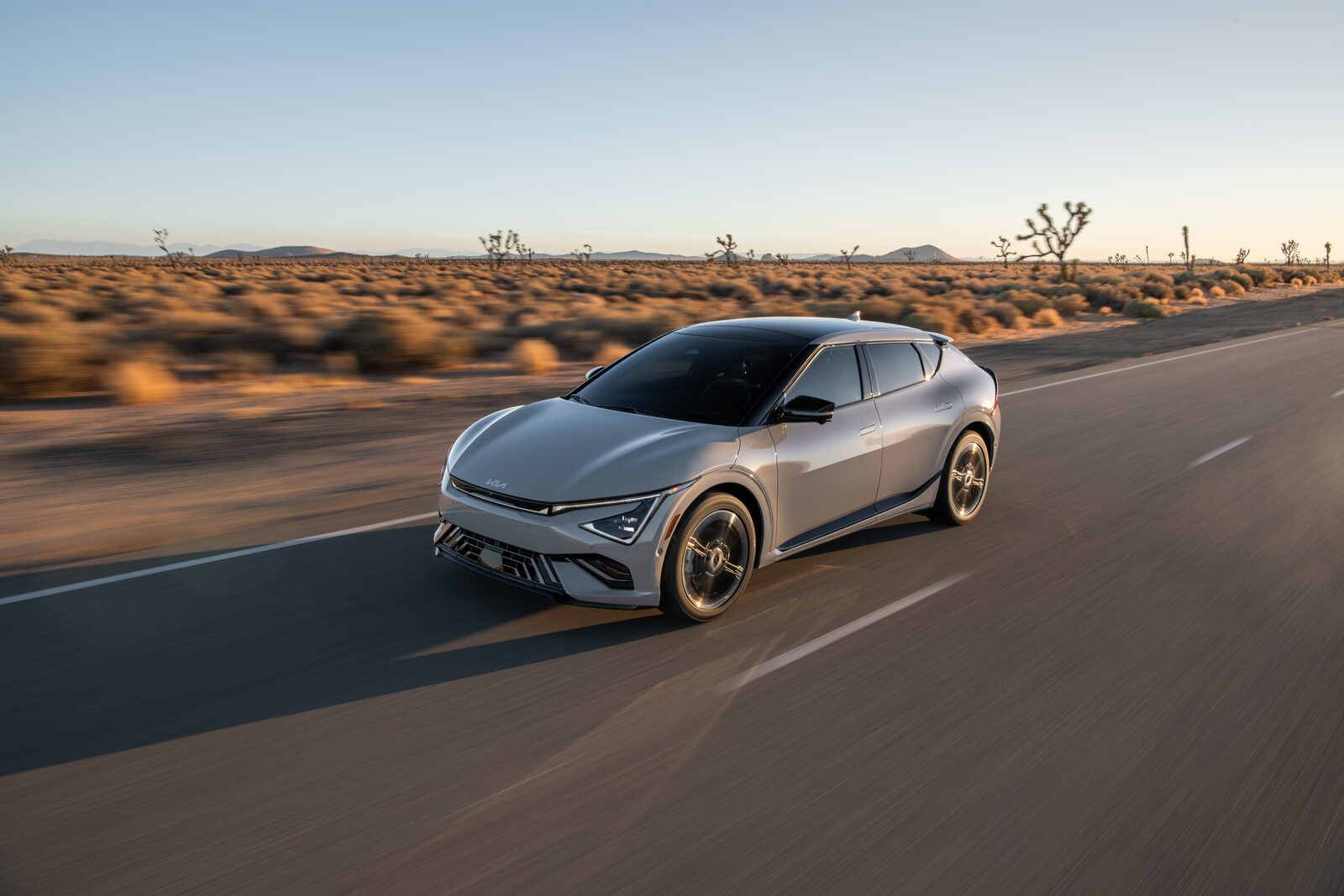
The following table outlines every factory-recommended service interval for your Kia EV6. Keeping to this schedule protects your warranty coverage and ensures peak performance throughout your ownership.
| Service Item | Interval | Notes |
|---|---|---|
| Tire Rotation | Every 7,500 miles | Critical for even wear; EV torque causes accelerated front or rear wear depending on drivetrain |
| Brake System Inspection | Every 7,500 miles | Check pads, rotors, calipers; regenerative braking reduces but does not eliminate mechanical wear |
| Cabin Air Filter | Every 15,000–30,000 miles | Replace sooner in dusty conditions or heavy pollen seasons |
| Wiper Blades | Every 12 months | Denver sun and dry air degrade rubber faster |
| Brake Fluid Replacement | Every 48,000 miles or 4 years | Hygroscopic fluid absorbs moisture over time regardless of usage |
| Reduction Gear Oil | Inspect at regular service visits | Single-speed gear requires periodic inspection; replacement if contaminated |
| 12V Auxiliary Battery | Inspect annually; replace every 3–5 years | Powers vehicle electronics, locks, and startup systems |
| High-Voltage Battery Coolant | Replace at 120,000 miles or 10 years; then every 24,000 miles | Thermal management system critical for battery longevity and charging speed |
| Software Updates | At every service visit | Includes battery management, ADAS calibrations, and infotainment updates |
| Tire Replacement | Every 25,000–40,000 miles | GT model may require replacement sooner due to 576 hp torque output |
Battery Care and Longevity Best Practices
The 77.4 kWh (or 58 kWh Standard Range) lithium-ion battery pack is the most expensive single component in your EV6, and proper care directly impacts its lifespan and resale value. Kia backs the high-voltage battery with a 10-year/100,000-mile warranty, but following these practices can keep your battery performing well beyond that threshold.
Charge between 20% and 80% for daily driving. Lithium-ion cells experience the least stress when operating in the middle of their charge range. Regularly charging to 100% or depleting below 10% accelerates chemical degradation within the cells. The EV6 allows you to set a charge limit directly from the infotainment system or the Kia Connect app, and we recommend setting your daily limit to 80%.
Reserve DC fast charging for road trips. While the EV6's 800-volt architecture handles 350 kW DC fast charging with remarkable efficiency, the heat generated during rapid charging creates thermal stress on the battery cells. Using Level 2 home charging (240V) for routine overnight charging is gentler on the pack and perfectly sufficient for daily commuting.
Precondition in cold weather. Denver winters routinely bring sub-zero temperatures, and cold lithium-ion batteries accept charge more slowly and deliver reduced range. The EV6's battery preconditioning system warms the pack before you begin driving or charging. Activating climate preconditioning while plugged in uses grid power rather than stored battery energy, preserving your range for the road.
The thermal management system is your battery's lifeline. The high-voltage coolant circulating through the battery pack maintains optimal operating temperatures during both charging and discharging. This coolant is engineered to last 120,000 miles or 10 years before its first replacement, after which it should be refreshed every 24,000 miles. Neglecting this service risks thermal runaway protection activation, reduced charging speeds, and premature battery capacity loss.
GT Model: High-Performance Service Considerations
The EV6 GT occupies a unique space in the Kia lineup. With 576 horsepower and a 3.4-second 0-to-60 time, it delivers supercar-level acceleration in a practical crossover body. That performance capability, however, introduces specific service demands that go beyond the standard EV6 maintenance schedule.
Tire wear is accelerated substantially. The GT's instant torque delivery puts enormous stress on tire contact patches during acceleration. Where a Long Range RWD model might see 35,000 to 40,000 miles from a set of tires, GT owners who regularly exploit the vehicle's performance capabilities may see replacement intervals closer to 20,000 to 25,000 miles. The GT ships with high-performance summer tires that prioritize grip over longevity, which further shortens their lifespan.
Brake components see heavier use. Despite regenerative braking handling a significant portion of deceleration, the GT's higher top speed and greater mass (approximately 4,600 pounds) mean the mechanical brakes work harder during spirited driving and high-speed stops. We recommend inspecting brake pads and rotors at every tire rotation and budgeting for earlier replacement compared to standard EV6 models.
Suspension inspection matters. The GT features a stiffer, sport-tuned suspension that absorbs road imperfections more aggressively. Denver's winter freeze-thaw cycles create road surface irregularities that can stress suspension bushings and control arms. Annual suspension inspections help catch worn components before they affect handling precision.
Tire Management: Handling Instant Torque
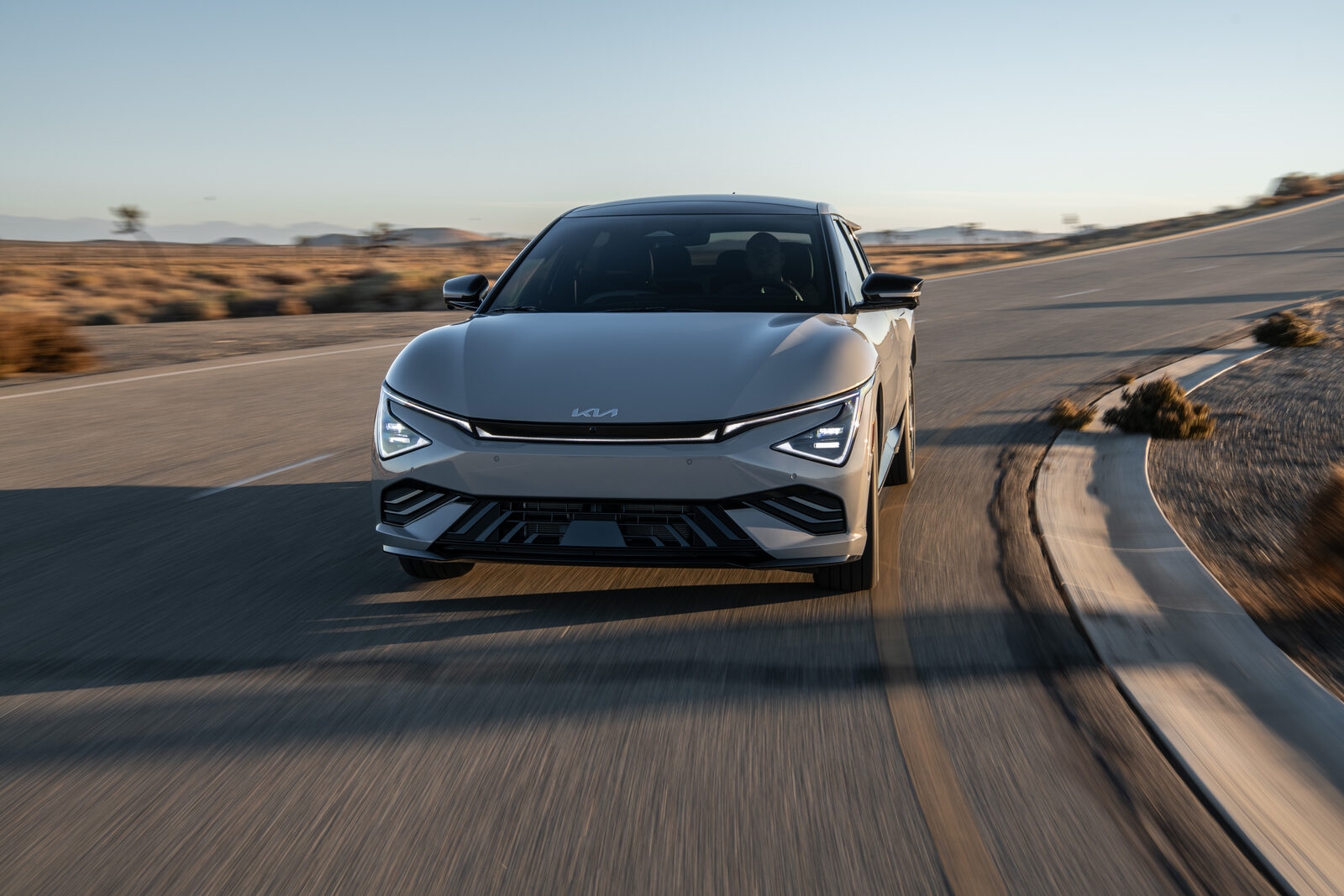
Every EV6 variant delivers 100% of its torque the instant you press the accelerator pedal. This fundamental characteristic of electric motors is thrilling to drive but creates unique tire wear challenges that require proactive management.
Consistent tire rotations every 7,500 miles are non-negotiable for even wear distribution. RWD models concentrate drive forces on the rear tires, causing them to wear faster, while AWD models distribute wear more evenly but still show patterns depending on driving habits. Skipping even a single rotation interval can create uneven wear that shortens the life of the entire set.
Tire pressure monitoring is especially important for EVs. Underinflated tires increase rolling resistance, which directly reduces your driving range and accelerates shoulder wear. The EV6's tire pressure monitoring system (TPMS) alerts you when pressures drop, but we recommend manual checks monthly, particularly as Denver temperatures fluctuate seasonally. A 10-degree Fahrenheit temperature change can shift tire pressure by approximately 1 PSI.
When replacing tires, choose EV-rated tires whenever possible. These tires feature reinforced sidewalls to handle the EV6's weight (heavier than comparable gas crossovers), low rolling resistance compounds to maximize range, and noise-dampening foam inserts to maintain the cabin quiet that EV drivers expect. Standard tires designed for lighter gas vehicles may wear prematurely and compromise range by 5% to 10%.
Colorado and Denver EV Considerations
Operating an EV6 along the Front Range and throughout Colorado introduces environmental factors that affect maintenance timing and driving strategy.
Altitude and range. Denver sits at 5,280 feet, and mountain destinations regularly exceed 10,000 feet. While electric motors are unaffected by altitude (unlike combustion engines that lose power in thinner air), the HVAC system works harder in temperature extremes common at elevation, which can reduce effective range by 10% to 20% in winter. Running the heated seats and steering wheel instead of the cabin heater is a proven strategy for extending winter range.
Road salt and magnesium chloride. Colorado DOT uses magnesium chloride as a de-icer on highways, and it is more corrosive to undercarriage components than traditional road salt. We recommend an undercarriage wash every two to four weeks during winter months to prevent corrosion to brake lines, suspension components, and the battery pack enclosure.
Summer heat and battery thermal management. Denver summers regularly push above 95 degrees Fahrenheit, which forces the battery thermal management system to work harder. Parking in shade or a garage whenever possible reduces thermal load on the battery pack and preserves cooling system efficiency. The high-voltage coolant inspection at regular service visits ensures the system can handle these demands.
Winter tire considerations for AWD models. While the EV6's AWD system provides excellent traction, dedicated winter tires remain the safest choice for I-70 mountain corridor driving. The traction law (Code 15 and Code 16) requirements apply to EVs just as they do to gas vehicles. A second set of wheels with winter tires also preserves your primary set from the abrasive effects of winter driving.
Why Emich Kia for EV6 Service in Denver
Servicing an EV6 is not the same as servicing a conventional vehicle, and choosing the right facility matters. Emich Kia in Denver offers distinct advantages for EV6 owners.
Our technicians hold Kia factory EV certifications and undergo continuous training on the E-GMP platform, 800-volt electrical systems, and high-voltage battery diagnostics. This specialized knowledge cannot be replicated at general repair shops that primarily service combustion vehicles.
We maintain Kia-specific diagnostic equipment capable of reading the EV6's battery management system data, calibrating advanced driver assistance systems (ADAS), and installing over-the-air software updates that require dealer-level authorization. These tools provide a complete picture of your vehicle's health that generic OBD-II scanners simply cannot access.
Every EV6 service at Emich Kia uses genuine Kia parts engineered specifically for the vehicle. From the correct specification brake fluid to OEM cabin air filters and EV-rated tires, genuine parts preserve your warranty coverage and ensure each component integrates seamlessly with the EV6's systems.
Our Denver location understands the unique demands that Colorado driving places on electric vehicles. We advise on winter preparation, charging infrastructure, range optimization strategies, and Colorado-specific EV incentive programs that can offset your ownership costs.
EV6 Warranty Coverage at a Glance
- Basic Warranty: 5 years / 60,000 miles
- Powertrain Warranty: 10 years / 100,000 miles
- High-Voltage Battery Warranty: 10 years / 100,000 miles
- Anti-Perforation (Corrosion): 10 years / 100,000 miles
Frequently Asked Questions
How often does the Kia EV6 need service?
The EV6 should be serviced approximately every 7,500 miles for tire rotation and brake inspection. Cabin air filters are replaced every 15,000 to 30,000 miles, and brake fluid is due every 48,000 miles or 4 years. Compared to a gas vehicle that typically requires service every 5,000 to 7,500 miles, the EV6's service schedule is less frequent and less costly.
Does the Kia EV6 need oil changes?
No. The EV6 is fully electric and has no internal combustion engine. Oil changes, oil filters, and all engine-related maintenance are completely eliminated. This is one of the biggest cost-saving advantages of EV ownership.
When should the EV6 battery coolant be replaced?
The high-voltage battery coolant should be replaced at 120,000 miles or 10 years, whichever comes first. After the initial replacement, the coolant should be refreshed every 24,000 miles. This service is essential for maintaining battery thermal management efficiency and charging speed.
How long do EV6 tires typically last?
Original equipment tires on the EV6 typically last between 25,000 and 40,000 miles with regular rotations every 7,500 miles. The GT model may see shorter tire life (20,000 to 25,000 miles) due to its 576-horsepower output and high-performance summer tires. Choosing EV-rated replacement tires helps maximize longevity.
Do EV6 brakes last longer than regular car brakes?
Yes, significantly. The EV6's regenerative braking system handles the majority of deceleration by converting kinetic energy back into stored battery charge. This dramatically reduces wear on the mechanical brake pads and rotors. Many EV owners find their brake pads lasting 80,000 to 100,000 miles or more, compared to 30,000 to 50,000 miles on a conventional vehicle.
Is it safe to charge my EV6 to 100% every day?
While the EV6 can safely charge to 100%, doing so daily accelerates long-term battery degradation. For daily driving, setting your charge limit to 80% is recommended. Reserve 100% charges for road trips when you need maximum range. The EV6's infotainment system and Kia Connect app both allow you to set and schedule charge limits easily.
How fast can the EV6 charge at a DC fast charger?
The EV6's 800-volt architecture supports charging at up to 350 kW, enabling a 10% to 80% charge in approximately 18 minutes under optimal conditions. Charging speed varies based on battery temperature, state of charge, ambient temperature, and the charger's maximum output. Using the battery preconditioning feature before arriving at a fast charger optimizes charging speed.
Does altitude affect the EV6's performance or range?
Unlike combustion engines that lose power at altitude, the EV6's electric motors produce full power regardless of elevation. However, Denver's temperature extremes and mountain driving can reduce effective range by 10% to 20%, primarily due to HVAC energy consumption and elevation changes. Regenerative braking recovers energy on mountain descents, partially offsetting the energy used during climbs.
What is the 12V battery in the EV6, and why does it matter?
In addition to the main high-voltage battery pack, the EV6 has a standard 12-volt auxiliary battery that powers the vehicle's electronics, door locks, lights, and startup systems. If this battery fails, the vehicle cannot start even with a fully charged main battery. It should be inspected annually and replaced every 3 to 5 years.
Does Emich Kia service all EV6 model years and variants?
Yes. Emich Kia services every EV6 configuration from the 2022 launch models through the 2025 refresh and beyond, including Standard Range, Long Range RWD, Long Range AWD, and GT variants. Our factory-trained EV technicians and Kia-specific diagnostic equipment handle the full spectrum of EV6 maintenance and repair needs.