Kia EV9 Service Intervals: Complete Maintenance Guide
Published June 13, 2026 • Emich Kia • Denver, CO
Quick Answer
The Kia EV9 requires significantly less maintenance than a gas-powered SUV, but it is not maintenance-free. You can skip oil changes, spark plugs, transmission fluid, and exhaust work entirely. However, the EV9 still needs regular tire rotations every 8,000 miles, brake inspections at the same interval, cabin air filter replacements every 15,000–24,000 miles, and brake fluid replacement every 48,000 miles or 4 years. High-voltage battery coolant should be replaced at 120,000 miles or 10 years. Overall, EV9 owners can expect to spend 30–50% less on maintenance compared to a traditional three-row SUV.
Key Takeaways
- The EV9 eliminates oil changes, spark plugs, transmission fluid, timing belts, and exhaust system maintenance entirely.
- Tire rotations every 8,000 miles are the most frequent service item due to the EV9's 5,000+ pound curb weight and instant electric torque.
- Regenerative braking dramatically extends brake pad life to 50,000 miles or more, but brake inspections should still happen every 8,000 miles.
- High-voltage battery coolant is the longest-interval major service, due at 120,000 miles or 10 years.
- Denver's cold winters and altitude require extra attention to battery preconditioning and tire condition.
- Emich Kia's certified EV technicians use Kia-approved diagnostic equipment specifically designed for 800V architecture vehicles.
Understanding the Kia EV9 Powertrain
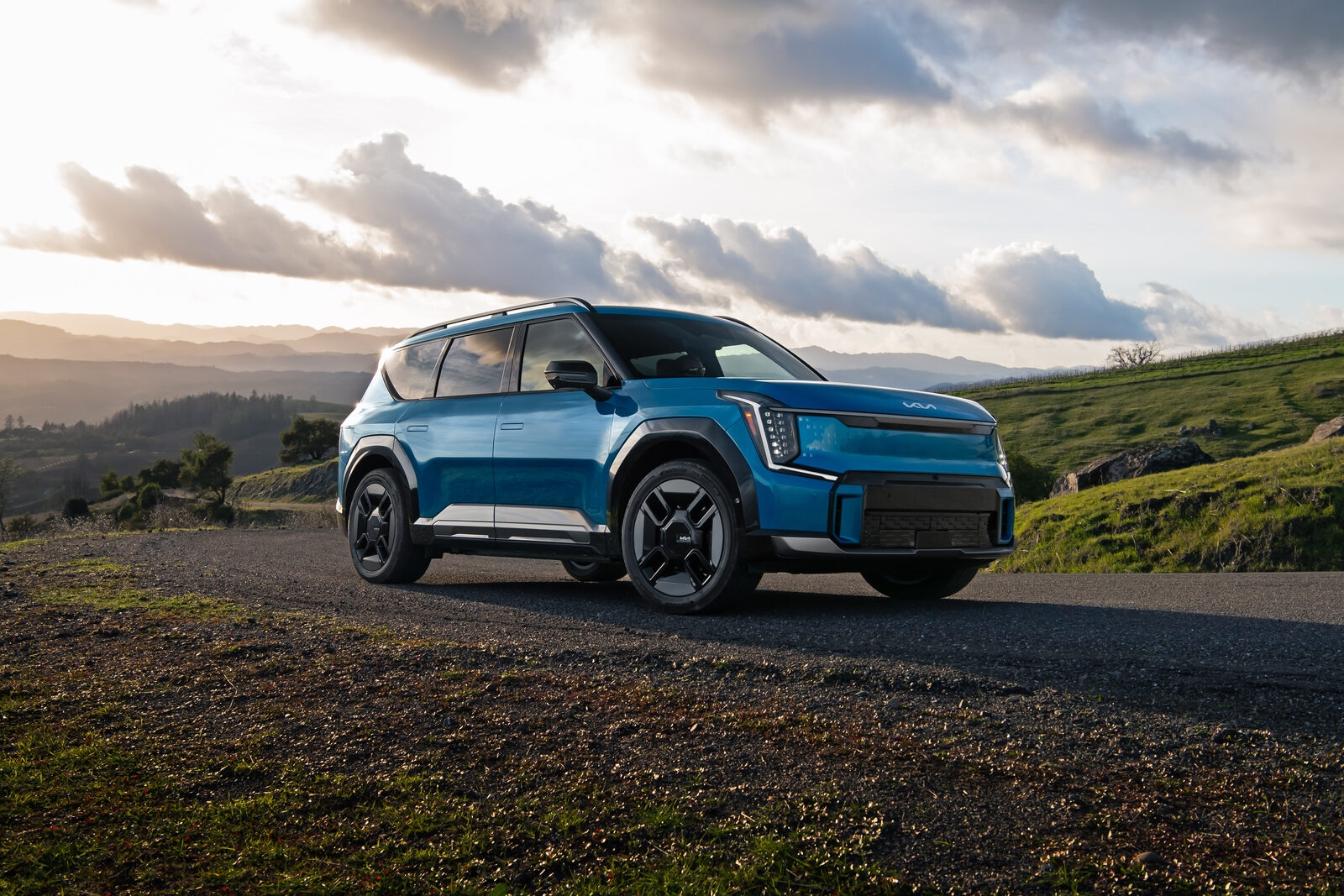
The Kia EV9, produced from the 2024 model year onward, is Kia's flagship all-electric three-row SUV built on the advanced Electric Global Modular Platform (E-GMP). This platform features an 800-volt electrical architecture, which is one of the highest voltage systems available in any production vehicle. The 800V system enables DC fast charging speeds of up to 350 kW, allowing the EV9 to charge from 10% to 80% in approximately 24 minutes at a compatible charging station.
The EV9 is available in several powertrain configurations. The Standard Range model pairs a 76.1 kWh battery pack with a single rear-mounted electric motor in a rear-wheel-drive layout, delivering an estimated 230 miles of range. The Long Range RWD model steps up to a 99.8 kWh battery and extends range to approximately 304 miles. The Long Range AWD and GT-Line AWD trims use the same 99.8 kWh battery with dual electric motors powering all four wheels, producing an estimated 280 miles of range. The GT-Line AWD adds performance-oriented tuning for drivers who want sharper acceleration and handling characteristics.
Regardless of trim level, every EV9 weighs in at over 5,000 pounds at the curb. This substantial weight, combined with the instant torque delivery characteristic of electric motors, has direct implications for tire wear, suspension loading, and braking system demands. Understanding these factors is essential for maintaining your EV9 correctly over the long term.
What the EV9 Does NOT Need: Eliminated Services
One of the most significant advantages of owning the Kia EV9 is the complete elimination of dozens of maintenance items that gas-powered three-row SUVs require. Since the EV9 has no internal combustion engine, there is no engine oil to change, no oil filter to replace, no spark plugs to inspect or swap, no air intake filter for combustion purposes, no timing belt or timing chain to worry about, no transmission fluid to flush (the EV9 uses a simple single-speed reduction gear), and no exhaust system components that corrode, leak, or fail.
For context, a traditional gas SUV like the Kia Telluride typically needs an oil change every 7,500 miles, spark plug replacement around 90,000 miles, transmission fluid service around 60,000 miles, and may face catalytic converter or exhaust system repairs as it ages. The EV9 owner never sees any of these costs. Over a 100,000-mile ownership period, this can translate to thousands of dollars in savings and significantly fewer trips to the service center.
Complete EV9 Service Interval Schedule
While simpler than an internal combustion vehicle, the EV9 still has a defined maintenance schedule. The following table outlines every recommended service interval based on Kia's official maintenance guidelines and our experience servicing these vehicles here in Denver.
| Service Item | Interval (Miles) | Interval (Time) | Notes |
|---|---|---|---|
| Tire Rotation | Every 8,000 mi | — | Critical due to 5,000+ lb curb weight |
| Brake Inspection | Every 8,000 mi | — | Pads typically last 50,000+ mi with regen braking |
| Suspension & Steering Inspection | Every 8,000 mi | — | Heavier vehicle increases wear on components |
| Multi-Point Inspection | Every 8,000 mi | — | Includes software update checks |
| Cabin Air Filter | Every 15,000–24,000 mi | — | Replace sooner in dusty or high-pollen conditions |
| Brake Fluid | Every 48,000 mi | Every 4 years | Whichever comes first |
| 12V Auxiliary Battery | Inspect at every service | Replace every 3–5 years | Powers vehicle systems, door locks, and startup |
| Reduction Gear Oil | Inspect periodically | — | Rarely needs replacement under normal conditions |
| High-Voltage Battery Coolant | First at 120,000 mi | First at 10 years | Then every 24,000 mi or 2 years after |
| Wiper Blades | As needed | Typically every 12 months | Colorado sun and snow degrade blades faster |
| Washer Fluid | As needed | — | Use freeze-resistant fluid in winter |
Tire Maintenance: Why It Matters More on the EV9
Tire care is arguably the single most important maintenance category for the Kia EV9. Two factors make tires wear faster on an EV compared to a gas SUV of similar size. First, the EV9's curb weight exceeds 5,000 pounds, which places considerably more load on each tire compared to lighter vehicles. Second, electric motors deliver maximum torque instantly from a standstill, which creates significantly higher shear forces on tire contact patches during acceleration.
We recommend rotating tires every 8,000 miles without exception. At each rotation appointment, our technicians measure tread depth at multiple points across each tire, check for uneven wear patterns that may indicate alignment issues, and verify tire pressures against Kia's specifications. For the EV9 in particular, we also check for signs of center-wear, which can develop if tire pressures are kept too high, and shoulder-wear from aggressive cornering at high vehicle weight.
When it is time to replace tires, we strongly recommend EV-specific tires designed for heavier vehicles. These tires feature reinforced sidewalls to support the extra weight, low rolling resistance compounds for maximum range, and noise-reduction foam inserts since electric vehicles lack engine noise to mask road sounds. Standard all-season tires may wear 20–30% faster on the EV9 compared to EV-rated alternatives.
Regenerative Braking and the Brake System
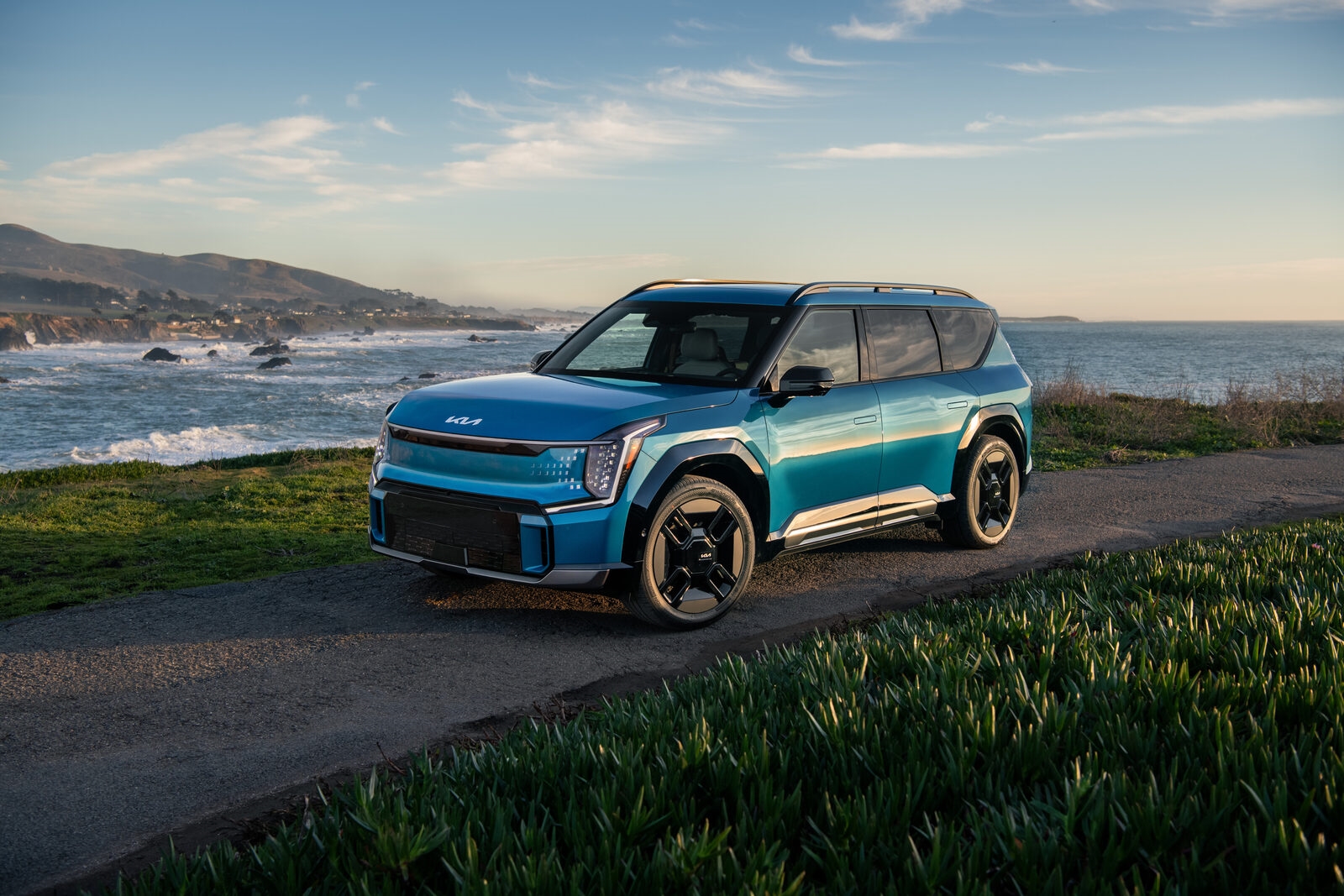
The Kia EV9 uses a sophisticated regenerative braking system that captures kinetic energy during deceleration and feeds it back into the battery. In most everyday driving situations, regenerative braking handles the majority of stopping duties, meaning the conventional friction brakes (disc brake pads and rotors) are used far less frequently than in a traditional vehicle.
This is a major advantage for longevity. While a gas-powered three-row SUV might need new brake pads every 25,000 to 40,000 miles, EV9 owners can reasonably expect brake pads to last 50,000 miles or more. In some driving scenarios, particularly in flat urban environments with consistent regenerative braking use, pads can last even longer.
However, reduced friction brake usage introduces a different concern: corrosion. When brake rotors are not heated regularly through friction, they are more susceptible to surface rust, especially in Denver where road salt and mag chloride are used during winter months. We inspect brake components every 8,000 miles to catch corrosion early. We also recommend periodically using the friction brakes deliberately during driving to keep rotors clean and functional. Brake fluid should be replaced every 48,000 miles or 4 years because brake fluid absorbs moisture over time regardless of how often the brakes are used, and moisture-contaminated fluid can cause internal corrosion within brake calipers and lines.
Battery Thermal Management and Coolant System
The EV9's battery pack relies on a liquid-cooled thermal management system to maintain optimal operating temperatures. This coolant system is entirely separate from any cabin heating or cooling loop. The battery thermal management system keeps cells within a narrow temperature window during charging, discharging, and idle periods, which directly impacts battery longevity, charging speed, and available range.
Kia specifies the first high-voltage battery coolant replacement at 120,000 miles or 10 years, whichever comes first. After that initial service, the interval shortens to every 24,000 miles or 2 years. This is a specialized service that requires certified EV technicians working with high-voltage-safe tools and Kia-approved coolant formulations. Using incorrect coolant or improper procedures can damage the battery cooling circuit and void warranty coverage.
High-Voltage Battery Health and Care Tips
The Kia EV9's battery is covered by a 10-year/100,000-mile warranty, but adopting good charging habits can help preserve battery capacity well beyond that coverage period. Here are the most impactful practices for long-term battery health:
- Avoid charging to 100% routinely. For daily driving, setting your charge limit to 80% reduces stress on battery cells. Reserve 100% charges for long road trips when you need maximum range.
- Avoid depleting to 0%. Repeatedly running the battery to very low states of charge accelerates degradation. Try to plug in when you reach 15–20% remaining.
- Limit frequent DC fast charging. The EV9's 800V architecture handles fast charging exceptionally well, but consistently relying on DC fast charging generates more heat than Level 2 home charging. Use Level 2 charging as your primary method and save DC fast charging for travel days.
- Precondition the battery in cold weather. The EV9 has a built-in battery preconditioning feature. Activating it before driving in Denver's cold winter mornings warms the battery to its optimal operating temperature, improving both range and charging efficiency.
- Park in a garage when possible. Extreme temperature swings, common in Colorado where summer highs can reach 100°F and winter lows can drop below 0°F, are easier on the battery when the vehicle is sheltered.
Colorado-Specific EV Concerns for EV9 Owners
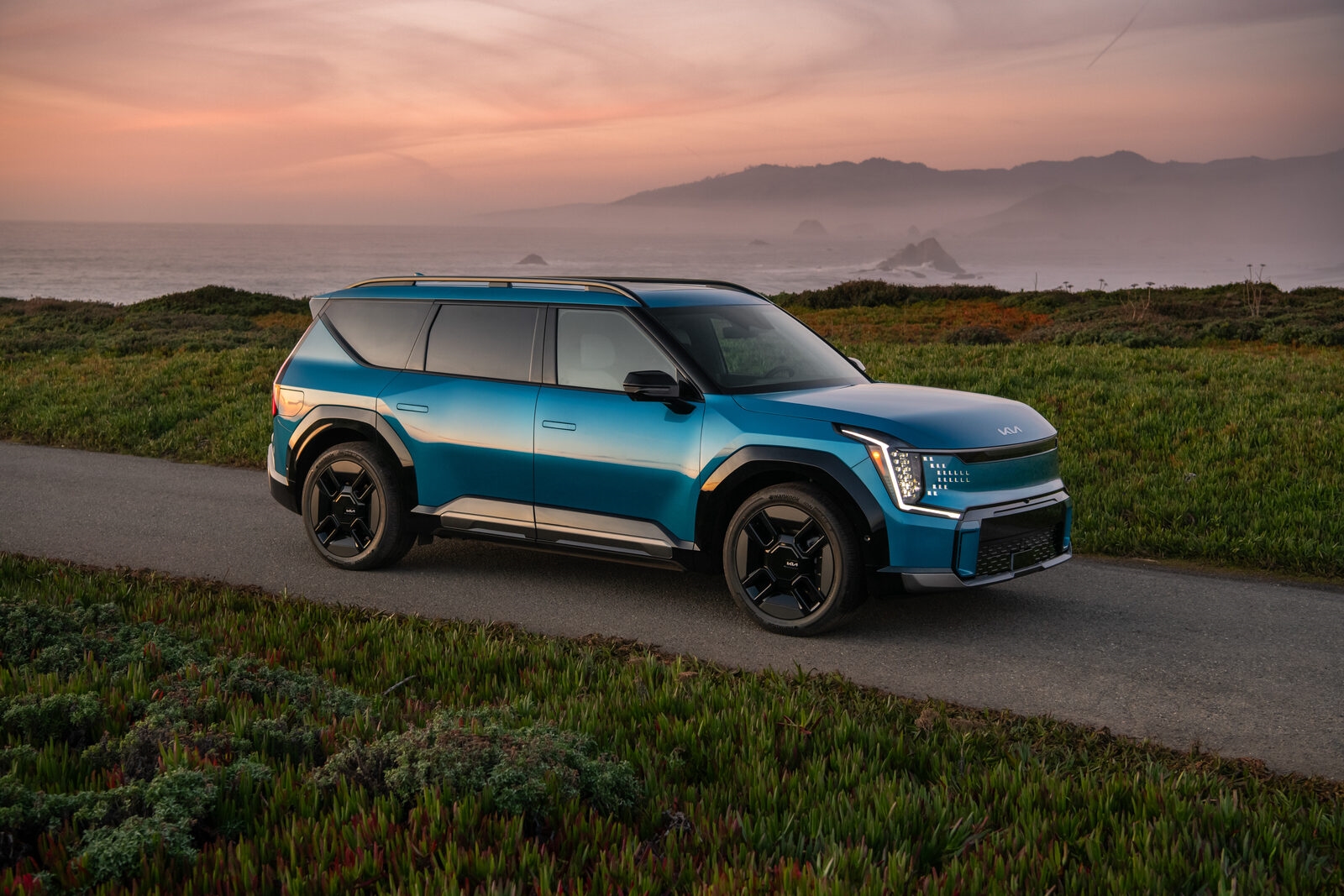
Driving an EV9 in the Denver metro area and across Colorado introduces a few unique considerations that owners in milder climates may not face:
Cold Weather Range Impact: Battery performance decreases in cold temperatures. Denver's winters can temporarily reduce your EV9's available range by 15–30% depending on conditions. Using the seat heaters and steering wheel heater instead of maxing out the cabin heater helps preserve range. Preconditioning the cabin while the vehicle is still plugged in means the grid warms the car instead of your battery.
Altitude Effects: Denver sits at 5,280 feet, and mountain drives regularly take you above 10,000 feet. Unlike gas engines that lose power at altitude due to thinner air, the EV9's electric motors perform identically regardless of elevation. However, steep mountain grades demand significant energy on the way up. The good news is that regenerative braking recovers substantial energy on the descent, partially offsetting the climb.
Road Salt and Magnesium Chloride: Colorado's winter road treatments are corrosive. We recommend undercarriage washes throughout the winter season to protect exposed components, brake hardware, and suspension fasteners. While the EV9's battery pack is sealed and protected, the surrounding chassis and brake components benefit from regular cleaning.
Tire Considerations for Mountain Driving: If you regularly drive I-70 to the ski resorts, consider a dedicated set of winter tires. The EV9's weight provides excellent traction, but proper winter rubber on mountain passes is both a safety measure and a legal requirement during traction law periods. Ensure any winter tires are load-rated appropriately for the EV9's weight class.
The 12V Auxiliary Battery: A Small Part with a Big Job
Even though the EV9 has a massive high-voltage battery pack, it still relies on a conventional 12V auxiliary battery to power vehicle electronics, door locks, interior lighting, and the systems that wake up the main battery. If the 12V battery fails, the vehicle will not start, even if the high-voltage battery is fully charged.
We inspect the 12V battery at every service visit and recommend proactive replacement every 3 to 5 years. In Colorado's temperature extremes, 12V batteries can degrade faster than in moderate climates. A simple voltage and load test during routine service visits catches failing batteries before they leave you stranded.
Software Updates and Multi-Point Inspections
At every service visit, our technicians perform a comprehensive multi-point inspection covering all accessible vehicle systems. This includes checking for available over-the-air software updates and applying any that require dealer-level tools. Kia periodically releases updates that improve battery management algorithms, charging profiles, driver-assistance calibrations, and infotainment features. Keeping your EV9's software current ensures you benefit from the latest improvements and safety patches.
Kia EV9 Warranty Coverage
Every new Kia EV9 comes with one of the most comprehensive warranty packages in the industry:
- Basic Warranty: 5 years / 60,000 miles covering the complete vehicle
- Powertrain Warranty: 10 years / 100,000 miles covering electric motors, reduction gear, and related drive components
- Battery Warranty: 10 years / 100,000 miles covering the high-voltage battery pack against defects and capacity loss below a specified threshold
Following the recommended maintenance schedule at an authorized Kia dealership like Emich Kia protects your warranty coverage and creates a documented service history that preserves resale value.
Why Service Your EV9 at Emich Kia in Denver
The Kia EV9 is an advanced vehicle with an 800-volt electrical architecture, complex battery thermal management, and integrated software systems that require specialized knowledge and equipment. At Emich Kia, our service department includes certified EV technicians who have completed Kia's comprehensive high-voltage vehicle training program. Our facility is equipped with Kia-approved high-voltage diagnostic tools, insulated safety equipment, and the software interfaces needed to perform battery health assessments, coolant system services, and firmware updates correctly.
As a Denver-based dealership, we understand the specific demands that Colorado's climate, altitude, and road conditions place on electric vehicles. We have serviced EV9s through Denver's harshest winter conditions and hottest summer stretches, and that local experience directly informs our maintenance recommendations. When you bring your EV9 to Emich Kia, you are working with a team that knows your vehicle and your driving environment.
Frequently Asked Questions: Kia EV9 Service
How often does the Kia EV9 need service?
The primary service interval for the EV9 is every 8,000 miles. At that interval, you should have tires rotated, brakes inspected, suspension and steering components checked, and a multi-point inspection completed. Beyond that, cabin air filters are replaced every 15,000–24,000 miles and brake fluid every 48,000 miles or 4 years.
Does the Kia EV9 need oil changes?
No. The EV9 is fully electric and has no internal combustion engine, so there is no engine oil, oil filter, or oil change requirement. This eliminates one of the most frequent and costly maintenance items associated with traditional vehicles.
How long do brake pads last on the EV9?
Thanks to regenerative braking handling most deceleration duties, the EV9's friction brake pads typically last 50,000 miles or more. In some cases, pads can last the entire ownership period. However, brake inspections every 8,000 miles are still recommended to check for corrosion, especially during Denver's salt-heavy winter months.
When does the EV9 battery coolant need to be replaced?
The initial high-voltage battery coolant replacement is due at 120,000 miles or 10 years, whichever comes first. After the first service, the interval shortens to every 24,000 miles or 2 years. This service requires Kia-certified technicians and approved coolant formulations.
How does cold weather affect the EV9's range in Denver?
Cold temperatures can reduce the EV9's available range by 15–30% during Denver's winter months. Battery preconditioning, using seat heaters instead of maximum cabin heat, and prewarming the cabin while plugged in all help minimize range loss. The EV9's thermal management system actively manages battery temperature to optimize performance in cold conditions.
Do EV9 tires wear out faster than tires on a gas SUV?
Yes, generally. The EV9 weighs over 5,000 pounds and delivers instant torque, both of which increase tire wear compared to lighter gas vehicles. Using EV-rated tires designed for heavier vehicles and rotating them every 8,000 miles helps maximize tire life. Expect to replace tires slightly more often than you would on a comparable gas-powered SUV.
Is it bad to DC fast charge the EV9 frequently?
The EV9's 800V architecture is designed to handle DC fast charging very well, and occasional fast charging is perfectly fine. However, relying exclusively on DC fast charging generates more heat in the battery cells than Level 2 home charging. For the best long-term battery health, use Level 2 charging as your primary method and reserve DC fast charging for road trips and time-sensitive situations.
What is the EV9 battery warranty?
The high-voltage battery pack is covered by a 10-year/100,000-mile warranty. The powertrain, including electric motors and the reduction gear, carries the same 10-year/100,000-mile coverage. The basic bumper-to-bumper warranty covers 5 years or 60,000 miles.
Should I charge my EV9 to 100% every night?
For daily driving, Kia recommends setting your charge limit to around 80%. Charging to 100% regularly places additional stress on battery cells and can accelerate capacity loss over time. Reserve full charges for occasions when you need maximum range, such as long road trips or mountain drives.
Can any mechanic service the Kia EV9?
While basic items like tire rotations and wiper blade replacements can be performed at many shops, high-voltage system work, battery coolant service, software updates, and diagnostic scans require Kia-certified EV technicians with specialized training and equipment. Servicing at an authorized dealership like Emich Kia ensures proper procedures are followed and warranty coverage is maintained.