Kia Sportage Service Intervals: Complete Schedule Guide
Published June 13, 2026 • Emich Kia • Denver, CO

Keeping your Kia Sportage on a strict maintenance schedule is one of the smartest investments you can make as a vehicle owner. Whether you drive the standard 2.5-liter gas engine, the fuel-efficient hybrid, or the plug-in hybrid variant, following Kia's recommended service intervals protects your warranty coverage, maximizes resale value, and ensures reliable performance on every Denver commute or mountain road trip. At Emich Kia, our factory-trained technicians service every Sportage generation and powertrain combination using genuine OEM parts and fluids.
Quick Answer
The 5th-generation Kia Sportage (2023+) requires an oil and filter change every 8,000 miles using full synthetic oil, while the 4th generation (2017–2022) follows a 7,500-mile interval. Tire rotations match each generation's oil change schedule. Cabin air filter replacement is recommended every 16,000–32,000 miles (5th gen) or 15,000–30,000 miles (4th gen), and coolant flush starts at 64,000 miles (5th gen) or 60,000 miles (4th gen). Hybrid and PHEV models share the 5th-gen intervals but add hybrid-specific inspections for battery coolant, regenerative braking components, and high-voltage systems.
Key Takeaways
- Full synthetic oil changes are required every 8,000 miles for the 5th generation (2023+) and every 7,500 miles for the 4th generation (2017–2022).
- The 5th-generation Sportage (2023–present) is available with three powertrains: 2.5L gas, 1.6L turbo hybrid, and 1.6L turbo plug-in hybrid.
- Hybrid and PHEV models require additional battery coolant inspections and regenerative brake system checks.
- Denver's altitude, temperature swings, and winter road conditions may require more frequent cabin air filter and coolant inspections.
- Kia provides a 5-year/60,000-mile basic warranty and a 10-year/100,000-mile powertrain warranty—but only when maintenance is performed on schedule.
- The 4th-generation Sportage (2017–2022) uses different engine options and slightly different fluid specifications.
Kia Sportage Generations and Powertrain Overview
Understanding which Sportage generation and engine you own is essential for following the correct service schedule. Kia has made significant engineering changes between the 4th and 5th generations, and each powertrain has unique maintenance requirements.
5th Generation (2023–Present, 2026 Mid-Cycle Refresh)
The current-generation Sportage rides on the Kia N3 platform and is offered in three powertrain configurations:
- 2.5L Inline-4 (Gas): Produces 187 horsepower and 178 lb-ft of torque, mated to an 8-speed automatic transmission. Available in FWD or AWD.
- 1.6L Turbocharged Inline-4 Hybrid (HEV): Pairs a turbo-four with an electric motor for a combined 232 horsepower and 271 lb-ft of torque through a 6-speed automatic transmission. Available in FWD or AWD.
- 1.6L Turbocharged Inline-4 Plug-In Hybrid (PHEV): Uses the same turbo-four and electric motor architecture but with a larger battery pack, delivering 268 combined horsepower and 271 lb-ft of torque through a 6-speed automatic. Available in FWD or AWD.
4th Generation (2017–2022)
The previous-generation Sportage offered two conventional gas engines:
- 2.4L Inline-4: 184 horsepower, paired with a 6-speed automatic transmission.
- 2.0L Turbocharged Inline-4: 240 horsepower, also with a 6-speed automatic.
Both 4th-gen engines follow similar maintenance intervals to the current 2.5L gas model, though fluid specifications and filter part numbers differ. Always confirm with your Emich Kia service advisor if you own a 2017–2022 model.
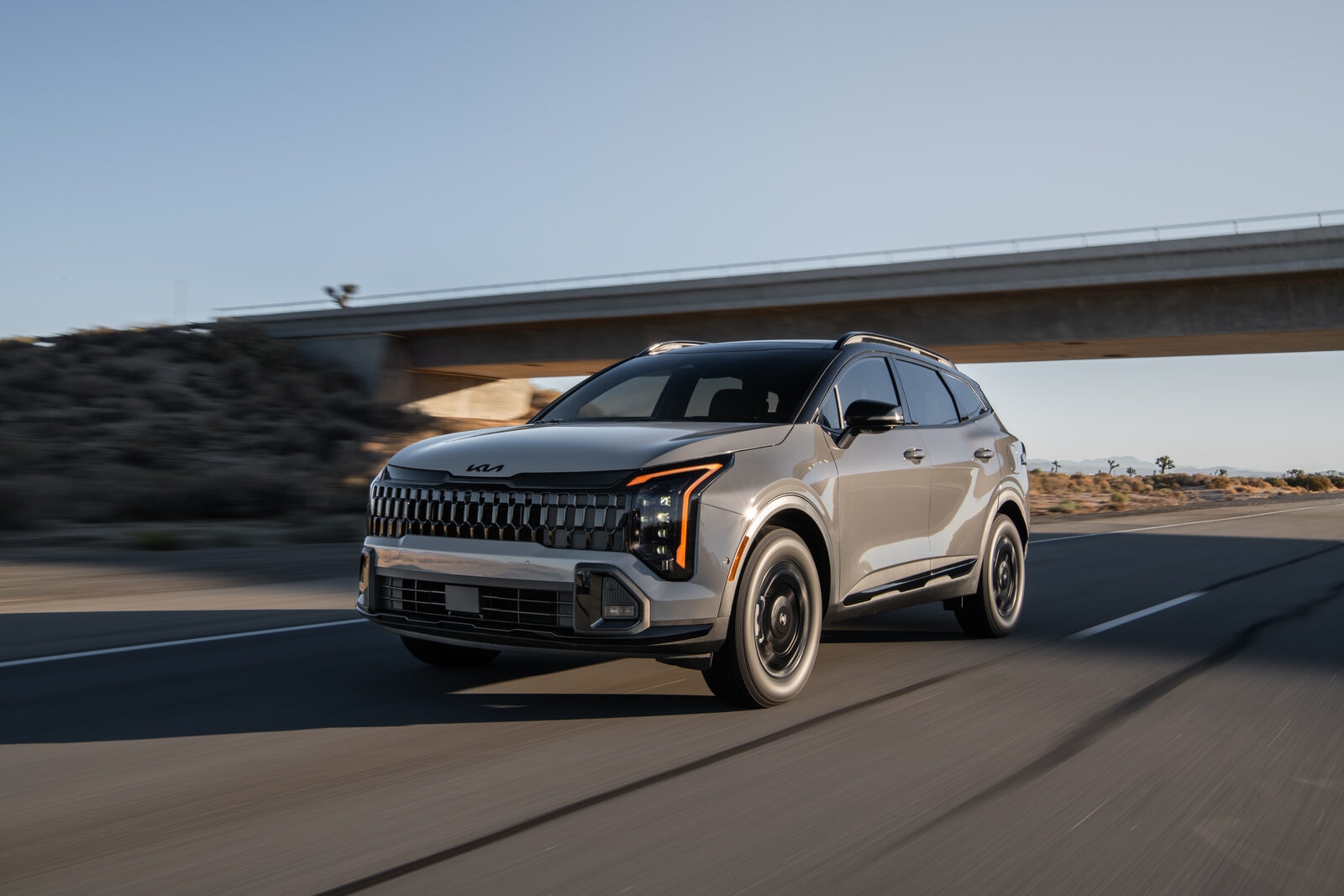
5th Generation Sportage (2023–Present) — 8,000-Mile Service Intervals
The current-generation Sportage is available with the 2.5L gas, 1.6L turbo hybrid, and 1.6L turbo plug-in hybrid powertrains. All three share the 8,000-mile base service interval established for the N3 platform.
| Service Item | Interval | Notes |
|---|---|---|
| Oil & Filter Change | Every 8,000 miles | Full synthetic 0W-20 (gas); 0W-16 (HEV/PHEV) |
| Tire Rotation | Every 8,000 miles | Check tread depth and pressure; adjust for altitude |
| Cabin Air Filter | Every 16,000–32,000 miles | Replace sooner in dusty or high-pollen conditions |
| Engine Air Filter | Every 32,000 miles | Inspect at every oil change; replace if visibly dirty |
| Brake Fluid | Every 32,000 miles | Flush and replace with DOT 4 fluid |
| Engine Coolant | First at 64,000 miles, then every 32,000 | Use Kia-approved long-life coolant |
| Transmission Fluid | Inspect at 64,000 miles | 8-speed auto (gas) / 6-speed auto (HEV/PHEV); replace if discolored |
| Spark Plugs | Every 64,000–100,000 miles | Iridium-tipped; check gap and condition |
| Hybrid Battery Coolant (HEV/PHEV only) | Inspect every 32,000 miles | Check level, concentration, and conductivity |
Hybrid and PHEV models share base intervals but add hybrid system inspections.
4th Generation Sportage (2017–2022) — 7,500-Mile Service Intervals
The previous-generation Sportage is powered by either the 2.4L naturally aspirated or 2.0L turbocharged inline-4, both paired with a 6-speed automatic transmission.
| Service Item | Interval | Notes |
|---|---|---|
| Oil & Filter Change | Every 7,500 miles | Full synthetic 5W-30 or 5W-20 depending on climate |
| Tire Rotation | Every 7,500 miles | Check tread depth and pressure; adjust for altitude |
| Cabin Air Filter | Every 15,000–30,000 miles | Replace sooner in dusty or high-pollen conditions |
| Engine Air Filter | Every 30,000 miles | Inspect at every oil change; replace if visibly dirty |
| Brake Fluid | Every 30,000 miles | Flush and replace with DOT 4 fluid |
| Engine Coolant | First at 60,000 miles, then every 30,000 | Use Kia-approved long-life coolant |
| Transmission Fluid | Inspect at 60,000 miles | 6-speed auto; replace if discolored or degraded |
| Spark Plugs | Every 60,000–100,000 miles | Iridium-tipped; check gap and condition |
The 2.0L Turbo engine benefits from 5,000-mile oil changes under severe conditions.
5th Generation Milestone Breakdown
8,000 Miles: Your first scheduled visit. The technician performs an oil and filter change with full synthetic 0W-20 oil (or 0W-16 for hybrid/PHEV), rotates your tires in a front-to-rear cross pattern, and conducts a multi-point inspection covering brakes, suspension, lights, and fluid levels.
16,000 Miles: Repeat oil service and tire rotation. Replace the cabin air filter, especially if you frequently drive on unpaved roads or through construction zones along I-70 or I-25.
32,000 Miles: This is a major service milestone. In addition to oil, filter, and tire rotation, the engine air filter is replaced, brake fluid is flushed and refilled, and the drive belt is inspected for cracks or glazing. The brake pads and rotors receive a thorough measurement. Hybrid and PHEV models also receive a battery coolant inspection at this interval.
64,000 Miles: The most comprehensive scheduled service. Engine coolant receives its first flush and fill. Transmission fluid is inspected for color, odor, and contamination. Spark plugs may be replaced depending on condition, and the fuel system is inspected for leaks or degradation.
Hybrid (HEV) Maintenance: What Changes
The Sportage Hybrid shares many service intervals with the gas model, but the electrified powertrain introduces additional inspection items that require specialized diagnostic equipment and technician certification.
Oil and Filter: The hybrid uses the same 7,500-mile oil change interval but specifies a lower-viscosity synthetic oil formulation (typically 0W-16 or as indicated in the owner's manual) to reduce internal friction and complement the electric motor's efficiency gains.
Hybrid Battery Coolant: The high-voltage battery pack uses a dedicated liquid cooling loop separate from the engine coolant system. This coolant should be inspected every 30,000 miles for proper level, concentration, and contamination. Unlike engine coolant, hybrid battery coolant degrades differently and must meet strict conductivity requirements.
Regenerative Braking System: Because the electric motor handles a significant portion of deceleration, the conventional friction brakes experience substantially less wear. However, the regenerative braking system itself requires periodic inspection of wiring harnesses, connectors, and the brake actuator assembly. Brake pads on hybrid models often last 50,000 miles or more, but the calipers should still be serviced to prevent seizing from inactivity.
High-Voltage Battery Inspection: At dealer-prescribed intervals, a certified Kia hybrid technician performs a comprehensive HV battery health assessment. This includes checking cell balance, state of charge accuracy, cooling system performance, and connector integrity. This inspection is critical for maintaining your 10-year/100,000-mile powertrain warranty coverage.
6-Speed Automatic Transmission: The hybrid's 6-speed automatic requires the same inspection protocol as the gas model's 8-speed unit, though the transmission fluid specification differs due to the integrated electric motor's thermal characteristics.
Plug-In Hybrid (PHEV) Maintenance: Additional Considerations
The Sportage PHEV adds one more layer of maintenance complexity beyond the standard hybrid. Because it can operate in pure electric mode for daily commuting, certain engine-related components may go extended periods without use, which creates its own set of concerns.
Plug-In Charging System Inspection: The onboard charger, charge port, and associated wiring should be inspected at every major service interval. Our technicians check for corrosion on the charge port contacts, verify proper sealing of the charge door, and confirm that the onboard charger communicates correctly with Level 1 and Level 2 charging equipment.
Engine Oil Considerations: PHEV owners who drive primarily in EV mode may go weeks or months between engine starts. Kia still recommends changing the oil every 7,500 miles or 12 months, whichever comes first. Extended oil stagnation can lead to moisture accumulation and acid formation, so the time-based interval is particularly important for PHEV drivers.
Larger Battery Pack Cooling: The PHEV's battery is significantly larger than the HEV's, generating more heat during charging and discharging cycles. The cooling system inspection is the same 30,000-mile interval but involves a more detailed assessment of coolant flow rates and thermal management system performance.
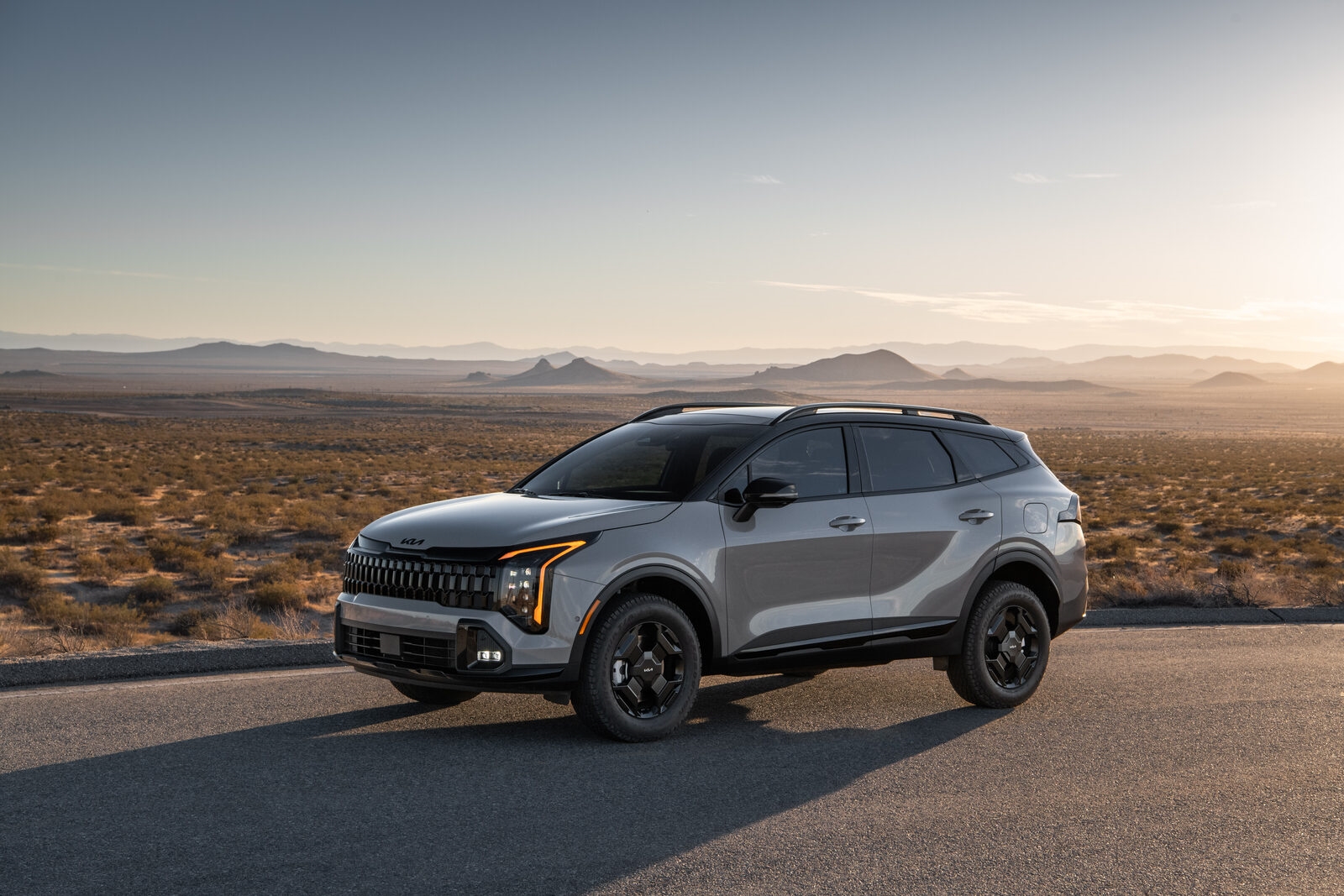
Colorado-Specific Maintenance Tips for Sportage Owners
Denver's unique combination of altitude, dramatic temperature fluctuations, and seasonal road conditions puts additional demands on your Sportage. Here are adjustments our Emich Kia technicians recommend for local drivers:
Altitude and Engine Performance: At Denver's 5,280-foot elevation, naturally aspirated engines like the 2.5L produce slightly less power due to thinner air. While the engine management system compensates automatically, the air filter works harder to supply adequate airflow. Consider inspecting your engine air filter every 15,000 miles instead of waiting for the 30,000-mile replacement interval.
Coolant Concentration: Winter temperatures in Denver regularly drop below zero, while summer highs exceed 100 degrees Fahrenheit. Maintaining the correct 50/50 coolant-to-water ratio is essential. Our technicians test coolant freeze point protection at every major service to ensure it meets Colorado's temperature extremes.
Cabin Air Filter: Denver's Front Range experiences elevated pollen counts in spring, wildfire smoke in summer, and dust from construction along the I-25 corridor year-round. Replacing the cabin air filter every 15,000 miles rather than 30,000 miles keeps your HVAC system efficient and your cabin air clean.
Tire Pressure Monitoring: Tire pressure fluctuates roughly 1 PSI for every 10-degree change in ambient temperature. During Colorado's 50-degree daily temperature swings in spring and fall, your TPMS light may illuminate frequently. Check tire pressure monthly and adjust to the door placard specification when tires are cold.
Brake Maintenance: Mag chloride and road salt used on Colorado highways accelerate brake component corrosion. We recommend a thorough brake cleaning and inspection every 15,000 miles for Sportage models driven on treated winter roads. Hybrid and PHEV owners should pay special attention, as infrequently used friction brakes are more susceptible to corrosion-induced seizing.
Battery Health in Cold Weather: Hybrid and PHEV battery efficiency decreases in cold temperatures. While the thermal management system protects the battery cells, PHEV owners should expect reduced electric-only range during Denver winters. Keeping the vehicle plugged in overnight allows the battery conditioning system to maintain optimal cell temperature before your morning commute.
Kia Warranty Coverage and Maintenance Records
Kia's warranty program is among the most comprehensive in the industry. The Sportage comes with a 5-year/60,000-mile basic warranty covering most components and a 10-year/100,000-mile powertrain warranty protecting the engine, transmission, and drivetrain. Hybrid and PHEV battery packs carry their own warranty terms as specified in your owner's documentation.
Maintaining your warranty requires documented proof that all scheduled maintenance was performed on time. Every service visit at Emich Kia is recorded digitally and linked to your VIN, creating an unbroken maintenance history that protects your coverage and strengthens your vehicle's resale value. If you've performed any maintenance at home or at an independent shop, bring receipts and records so we can update your file.
Why Service Your Sportage at Emich Kia in Denver
Emich Kia has served the Denver metro area for decades with a commitment to honest, transparent, and technically excellent vehicle care. Here is what sets our service department apart:
- Factory-Trained Technicians: Every technician in our shop holds current Kia certification, including specialized training for hybrid and PHEV high-voltage systems. We invest in ongoing education so our team stays ahead of evolving Sportage technology.
- Genuine Kia OEM Parts: We use only manufacturer-approved parts and fluids that meet or exceed Kia's engineering specifications. This protects your warranty and ensures every component performs as designed.
- Colorado Expertise: Our technicians understand Denver's altitude, climate, and road conditions. We tailor maintenance recommendations to local driving realities rather than applying generic national guidelines.
- Transparent Pricing: You receive a detailed estimate before any work begins. No surprises, no unauthorized charges, no pressure to approve unnecessary services.
- Convenient Location: Located in Denver with easy access from I-25 and I-70, Emich Kia is a convenient stop for drivers across the Front Range, from Lakewood and Littleton to Aurora and Centennial.
Frequently Asked Questions
How often should I change the oil in my Kia Sportage?
Kia recommends a full synthetic oil and filter change every 8,000 miles for the 5th generation (2023+), including the 2.5L gas, hybrid, and plug-in hybrid, and every 7,500 miles for the 4th generation (2017–2022). If you drive primarily in severe conditions such as frequent short trips, dusty roads, or extreme temperatures, consider changing oil every 5,000 miles.
What type of oil does the Kia Sportage use?
The 5th-generation Sportage 2.5L engine uses 0W-20 full synthetic oil. Hybrid and PHEV models may specify a lower-viscosity formulation. Always refer to your owner's manual or ask your Emich Kia service advisor for the correct specification for your model year and powertrain.
When should I replace the spark plugs in my Sportage?
Spark plugs in the Sportage are designed to last between 60,000 and 100,000 miles. Iridium-tipped plugs at the longer end of that range are standard on 5th-generation models. Your technician will inspect them during major service milestones and recommend replacement based on electrode wear and gap measurement.
Does the Sportage Hybrid require different maintenance than the gas model?
Yes. While the hybrid shares many service intervals with the gas engine, it adds hybrid battery coolant inspections every 30,000 miles, regenerative braking system checks, and periodic high-voltage battery health assessments. The hybrid also uses a different oil viscosity specification and a 6-speed transmission instead of the gas model's 8-speed.
How often should I rotate the tires on my Sportage?
Kia recommends tire rotation every 8,000 miles for the 5th generation (2023+) and every 7,500 miles for the 4th generation (2017–2022), typically performed alongside your oil change. Regular rotation ensures even tread wear across all four tires and is especially important for AWD Sportage models, where uneven wear can stress the drivetrain.
When should I flush the coolant in my Sportage?
The engine coolant should be flushed for the first time at 60,000 miles, then every 30,000 miles thereafter. Hybrid and PHEV models have a separate battery coolant system that requires inspection at 30,000-mile intervals. Denver's extreme temperature range makes timely coolant service particularly important.
Is the Kia Sportage PHEV maintenance more expensive than the gas model?
Routine maintenance costs are similar because the PHEV shares most service intervals with the gas model. However, the PHEV adds charging system inspections and more detailed battery cooling assessments. Brake pad replacement costs may actually be lower because regenerative braking significantly reduces friction brake wear.
Does altitude affect my Sportage's maintenance schedule in Denver?
Denver's 5,280-foot elevation does not change the factory maintenance intervals, but it does affect air filter cleanliness and coolant boiling points. Our technicians recommend inspecting the engine air filter more frequently and verifying coolant concentration at every major service to account for Colorado's altitude and temperature extremes.
What warranty coverage does my Sportage have?
Every Kia Sportage includes a 5-year/60,000-mile basic warranty and a 10-year/100,000-mile powertrain warranty. Maintaining documented service records at an authorized dealership like Emich Kia is the best way to ensure uninterrupted warranty coverage throughout ownership.
Can I service my Sportage at any shop and keep my warranty?
Technically, yes. Federal law allows you to have maintenance performed at any qualified shop. However, you must retain all receipts and ensure the correct OEM-specification fluids and parts are used. Servicing at Emich Kia simplifies this process because every visit is automatically documented under your VIN and linked to Kia's warranty system.